
Choosing between the MacBook Air and MacBook Pro feels harder than it should.
They look similar.
They share the same chip family.
And the price gap isn’t always dramatic.
So what are you really paying for?
Let’s simplify it.
What Apple Changed With the Newest Models
The latest MacBooks continue using Apple Silicon — now refined into newer M4 and M4 Pro configurations.
Performance per watt remains impressive.
Battery life is excellent.
And thermals are more efficient than older Intel-era machines.
You can compare the current lineup directly on Apple’s official site.
On paper, both Air and Pro look powerful. In real life, the difference shows up in sustained workloads.
That’s where the separation begins.
MacBook Air: Quiet, Light, and More Capable Than Most People Need
The Air is fanless.
That means it runs silently. It also means that under heavy, sustained load, it eventually reduces performance to stay cool.
For everyday work — browsing, writing, spreadsheets, coding small projects — it feels fast. Very fast.
For most consumers, this is enough.
And honestly, for many developers too.
Unless you’re compiling large codebases constantly or exporting video daily, the Air handles modern workflows comfortably.
Here’s what actually matters: it feels responsive in normal use. That’s 90% of people.
MacBook Pro: Built for Sustained Performance
The Pro adds active cooling.
That one difference changes a lot.
With fans, the Pro can maintain high performance for longer periods. It doesn’t throttle as quickly during video rendering, heavy builds, or long exports.
If your workload spikes occasionally, the Air works.
If your workload stays high for hours, the Pro makes sense.
That’s the real trade-off.
Performance: Burst vs Endurance
Both machines are fast.
The Air delivers strong burst performance. Open apps, multitask, run development tools — no issue.
The Pro sustains that performance longer. It handles heat better and stays consistent under pressure.
Independent testing from NotebookCheck consistently shows this pattern across generations.
For office use, the difference is invisible.
For long creative sessions, it’s noticeable.
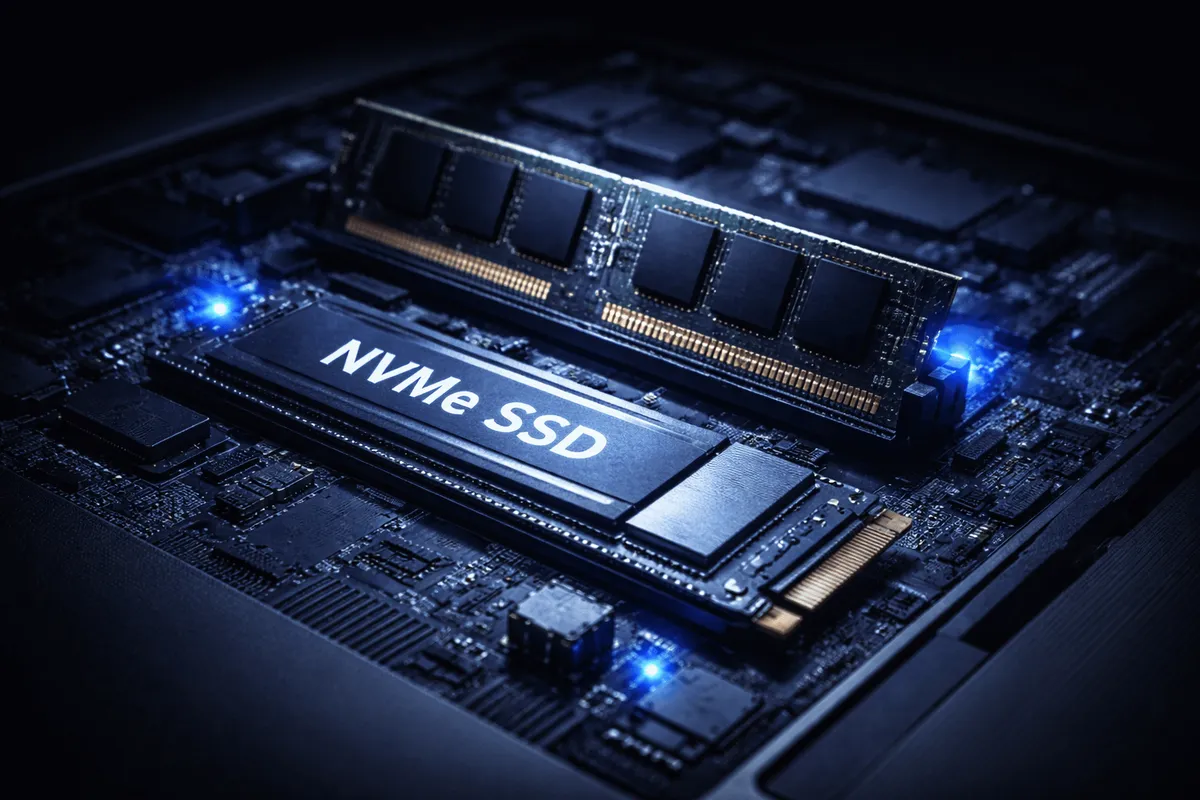
RAM: 16GB, 24GB — Does It Change the Decision?
Apple’s unified memory is efficient.
But it’s not upgradeable.
If you’re deciding between 16GB and 24GB, here’s the practical view:
For normal productivity and light development, 16GB works well.
For heavy multitasking, large browser sessions, Docker containers, or creative apps — 24GB offers breathing room.
It won’t make your machine twice as fast.
It will make it age better.
In plain English: buy the RAM you’ll need two years from now, not today.
Display, Ports, and Practical Differences
The Pro often includes:
- Brighter display
- More ports
- Slightly better speakers
- Higher sustained brightness
The Air focuses on portability and simplicity.
It’s lighter.
It’s thinner.
It feels effortless to carry.
If you move around often, the Air’s weight matters more than you expect.
If you dock into monitors and external drives daily, the Pro’s ports might justify the upgrade.
Ecosystem Advantage (The Quiet Benefit)
If you already use an iPhone or AirPods, the integration is seamless.
File sharing is simple.
AirPods switch instantly.
Messages sync across devices.
This isn’t a spec-sheet feature — but it improves daily experience.
And for many people, that consistency is worth more than raw benchmarks.
Who Should Buy the Air?
The Air makes sense if you:
- Work in documents, email, and browsers
- Write code but don’t push massive builds daily
- Travel often
- Value silence and battery life
- Want a lighter machine
For most regular users, the Air is the smarter buy.
Yes, even in 2026.
Who Should Buy the Pro?
The Pro makes sense if you:
- Edit video professionally
- Render 3D or large creative projects
- Compile large codebases frequently
- Need extra ports and sustained brightness
- Push your machine daily for hours
If your laptop earns you money under heavy load, the Pro is easier to justify.
Otherwise, you might be paying for performance you won’t use.
The Honest Downsides
The Air can throttle under sustained heavy tasks.
The Pro is heavier and more expensive.
Both charge significant premiums for storage upgrades.
There’s no perfect machine.
There’s only the right balance.
Final Thoughts
Most people overestimate how much performance they need.
The Air handles everyday work effortlessly.
The Pro handles prolonged intensity better.
Here’s what actually matters: choose based on how long your workloads last, not how impressive the spec sheet looks.
In plain English: if you’re unsure, the Air is usually enough.
And that’s a good thing.