
5 Laptop Buying Mistakes Most People Make
Buying a laptop should be simple.
Instead, it turns into spec anxiety.
More RAM. Faster chip. Bigger screen. “Pro” branding.
And suddenly you’re spending hundreds more than you planned — without being sure why.
Let’s simplify it.
Because most people don’t buy the wrong laptop.
They just buy the wrong reasons.
⸻
Mistake #1: Buying for Specs, Not for Usage
This is the most common one.
You read:
• 32GB RAM
• i9 / Ultra / Pro processor
• 1TB storage
It sounds powerful. Future-proof. Safe.
But here’s the real question:
What do you actually do every day?
If your routine is:
• Browsing
• Office work
• Streaming
• Light creative tasks
You don’t need workstation-level hardware.
Buying for specs feels rational.
Buying for usage is smarter.
For most office work, balanced mid-range machines are already overqualified.
⸻
Mistake #2: Ignoring RAM and Focusing Only on the Processor
People obsess over the CPU.
i5 vs i7. M4 vs M4 Pro. Ryzen 7 vs Ryzen 9.
But they buy it with 8GB RAM.
That’s where slowdowns happen.
Modern systems multitask constantly:
• Browsers eat memory
• Background apps sync
• OS features run silently
A mid-tier processor with 16GB RAM often feels smoother than a high-end chip with 8GB.
Performance isn’t just about speed.
It’s about breathing room.
⸻
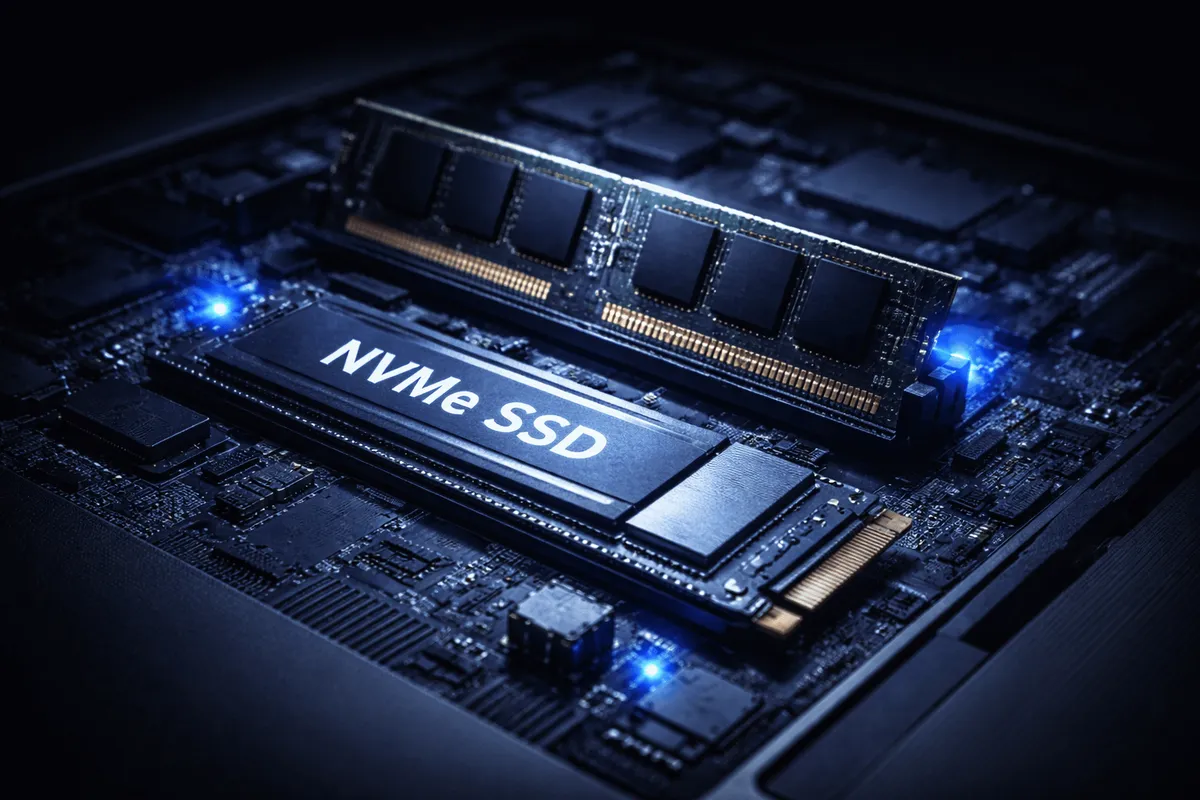
Mistake #3: Overpaying for Storage Upgrades
Manufacturers know this trick.
You see:
• 256GB → “Too small.”
• 512GB → +€200
• 1TB → +€400
The jump feels scary.
But most people:
• Use cloud storage
• Stream media
• Don’t store massive local libraries
External SSDs are cheap.
Cloud backups are standard.
Internal storage is convenient — but often overpriced.
Buy what you realistically need.
Not what feels psychologically safe.
⸻
Mistake #4: Confusing “Pro” with Necessary
The word “Pro” sells confidence.
It suggests:
• More power
• More status
• More longevity
Sometimes it’s justified.
Sometimes it’s marketing.
If you export 4K video daily, render 3D models, or compile code for hours — Pro machines make sense.
If you write emails, manage spreadsheets, and watch Netflix?
You’re paying for unused headroom.
Unused power doesn’t make a laptop feel better.
It just makes it more expensive.
⸻
Mistake #5: Ignoring Weight, Battery, and Noise
Specs look impressive on paper.
But daily experience is different.
Ask yourself:
• How heavy is it in a backpack?
• Does the fan run loudly?
• How long does it last unplugged?
A slightly less powerful laptop that:
• Runs silent
• Stays cool
• Lasts all day
Often feels better than a faster one that drains quickly and heats up.
Here’s what actually matters:
Comfort compounds over years.
⸻
What People Don’t Talk About
A few honest realities:
• Most mid-range laptops today are already very fast.
• You’re more likely to overspend than underspend.
• Longevity comes from balanced specs, not extreme ones.
The biggest buying mistake isn’t choosing something “too weak.”
It’s buying something you’ll never fully use.
⸻
Final Thought
In plain English:
Buy for your workload.
Not for the marketing tier.
Buy balanced, not flashy.
That’s how you avoid overpaying — and still end up with a laptop that feels fast for years.